Hello. Here is an interesting hypothesis regarding the therapeutic lag of psychotropic medications, from the always engaging, Dr. Henry A. Lester:
In a new research review paper, published in Biological Psychiatry, Lester—along with senior research fellow Julie M. Miwa and postdoctoral scholar Rahul Srinivasan—proposes that psychiatric medications may work in the same “inside-out” fashion {as nicotine}—and that this process explains how it takes weeks rather than hours or days for patients to feel the full effect of such drugs.Dr. Lester’s work with nicotine as pertaining to addiction, has shown that the uncharged nicotine molecule can pass freely through lipid layers, thus, entering cells and therein, the endoplasmic reticulum.
“We’ve known what happens within minutes and hours after a person takes Prozac, for example,” explains Lester. “The drug binds to serotonin uptake proteins on the cell surface, and prevents the neurotransmitter serotonin from being reabsorbed by the cell. That’s why we call Prozac a selective serotonin reuptake inhibitor, or SSRI.” While the new hypothesis preserves that idea, it also presents several arguments for the idea that the drugs also enter into the bodies of the nerve cells themselves.
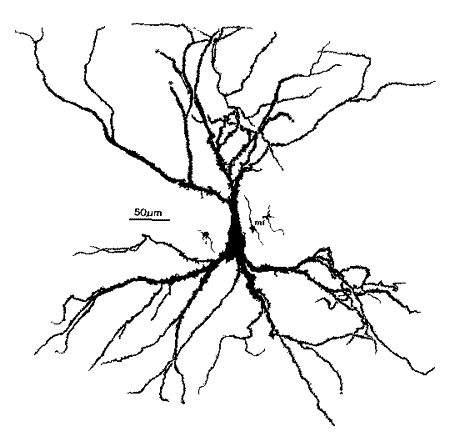
In the E.R. of GABA-ergic neurons, the nicotine molecules bind to acetylcholinergic/nicotinic receptors. Normally, these receptors become hung up in the E.R. and escape infrequently. However, in the state – bound to nicotine – they change shape, such that they can more easily leave the endoplasmic reticulum and migrate to the cell (neuron, of course, dendrite) surface, greatly increasing the number of Ach/nicotinic receptors.
This process is referred to as “matchmaking,” and, along with the hypothesis that the bound receptor is more greatly protected from degradation (Chaperoning), Dr. Lester proposes that SSRI’s and neuroleptics may act on the brain similarly, the delay due, to the time for axonal travel, and perhaps, then, the therapeutic benefit is the result of increased, post-synaptic serotonin receptor build up.
This process of acting – not on a surface cellular receptor – but on an intracellular target, is referred to as an inside-out mechanism.


No comments:
Post a Comment